Common Photo Sizes: A Guide for Frames, Albums & Walls
Choosing the right print size becomes much easier when you think about what the photo is for. A picture going into an album has different needs from one being framed for a bedside table, given as a gift, or displayed as the main feature on a living-room wall. Instead of treating photo sizes as a list of numbers, it helps to match each size to a real use.
This guide looks at standard photo sizes through everyday situations. You will see which picture sizes suit albums, frames, gifts, gallery arrangements, and larger wall displays, along with what to consider before enlarging an image. The aim is to help you choose a size that feels right for the photo and the place where it will be seen.
Think About the Purpose Before You Choose a Size
A useful starting point is to ask one simple question: what will this photo do?
If it is going into a family album, the priority is convenience and consistency. If it is a portrait for a desk, the print should be easy to frame and large enough to see clearly at close range. If the image is meant to become wall art, scale matters much more.
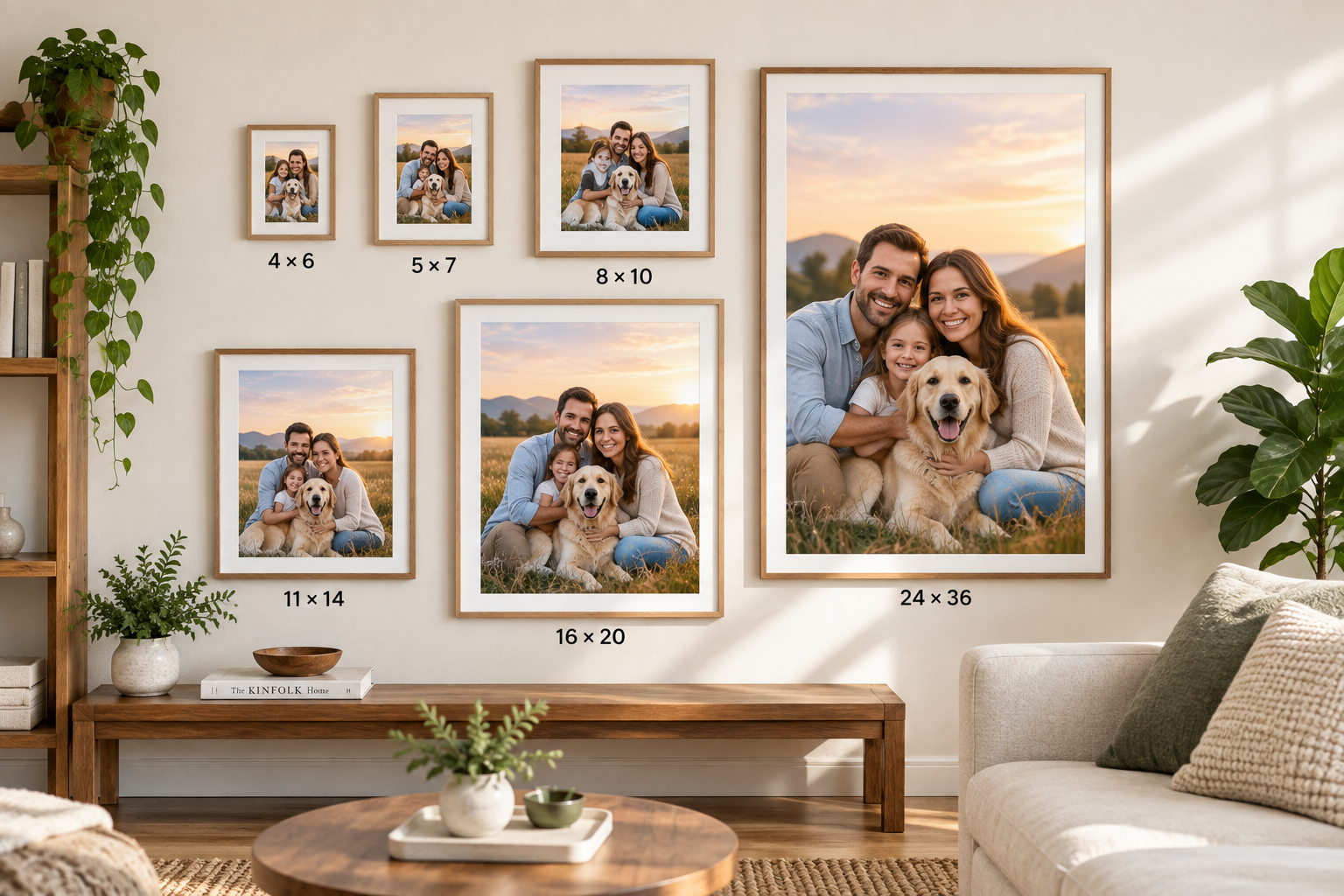
This is why there is no universal answer to what is a normal picture size. A 4x6 may be the obvious choice for everyday snapshots, but an 8x10, 11x14, or larger format can make more sense for a framed feature or wall display.
Best Photo Sizes for Albums and Memory Books
Albums work best with smaller prints that are easy to arrange and repeat across multiple pages.
The 4x6-inch format remains one of the most practical common photo sizes because it fits most traditional albums and works well for travel photos, family moments, birthdays, and everyday snapshots. A 5x7 can be useful when you want certain images to receive more attention without taking over an entire page.
Photo sizes smaller than 4x6 can also be useful in scrapbooks, journals, mini albums, and memory boxes. Compact prints allow you to include more images alongside handwritten notes, tickets, cards, or other keepsakes.
For albums, consistency often matters more than impact. Repeating one or two sizes can make the whole collection feel organised.
Which Photo Sizes Work Best in Frames?
Frames are one of the easiest ways to narrow down a photo size because many frame dimensions are already standardised.
A 5x7 works well for desks, shelves, and bedside tables. An 8x10 gives portraits and family photos more presence and is a popular choice for display in living areas or home offices. An 11x14 is better suited to a wall or larger surface where the image needs more visual weight.
Custom Framed Prints can be useful when you want the image and frame to feel like one finished piece rather than choosing each component separately.
Remember that the outside dimensions of the frame will be larger than the photo itself. Mats can increase the overall footprint even further, so measure the available space before ordering.
Use Different Sizes to Build a Photo Story
Not every wall needs one oversized image. A group of prints can tell a stronger story, especially when the photos are connected by subject, place, or time.
For example, a travel wall might combine a cityscape, a food photo, a landscape, and a candid moment from the same trip. A family wall could mix portraits with smaller everyday scenes.
When creating a group, choose two or three picture sizes and repeat them. Too many different dimensions can make the arrangement feel random. A Canvas Wall Display can also help turn several related photographs into one coordinated wall feature.
The spacing between prints matters just as much as the sizes. Keeping gaps consistent helps the arrangement feel deliberate.
When a Larger Print Makes More Sense
Some images lose their impact when printed small. Landscapes, architecture, wedding portraits, wildlife, and detailed travel photos often benefit from more room.
Larger print sizes for photos such as 16x20, 20x30, or 24x36 can work well when the image is intended to be a focal point. These dimensions suit living rooms, bedrooms, stair landings, and other areas where the print can be viewed from several metres away.
Canvas prints are a strong option when you want the photo to feel like wall art without adding a separate frame. Poster Prints can suit graphic photography, travel images, or a more casual display style.
Before going large, check that the original file has enough resolution. A dramatic image will not look its best if the source file is heavily compressed or slightly blurry.
Match the Print Material to the Type of Photo
Size is only one part of the final result. The material can change how the image feels.
Metal Prints can suit high-contrast photographs, architecture, city scenes, and images with strong colour. Acrylic Prints can work well for sharp photography and contemporary interiors where a polished surface suits the room.
Canvas often feels softer and more traditional, while posters can be lighter and easier to change. Framed prints can add structure and work especially well for portraits or formal photography.
Think about the mood of the image as well as the dimensions. A family portrait may need a different presentation from a night-time skyline or coastal landscape.
How to Choose Between Similar Photo Print Sizes
Sometimes the difference between two sizes seems small, but the final display can feel quite different.
A 4x6 is compact and easy to use in albums. A 5x7 is still small enough for a table but gives the subject more breathing room. An 8x10 begins to feel more like a feature print, especially once framed. Moving to 11x14 or 16x20 gives the photo enough presence for a wall.
When comparing photo print sizes, think about the viewing distance. If the image will be seen from across the room, choose a larger size. If it will be handled or viewed from close range, a smaller format may be enough.
Use the Photo’s Shape to Guide the Size
One reason people struggle with what are standard picture sizes is that the original image may not match the proportions of the print.
A wide landscape may crop awkwardly into a squarer size. A tall portrait may lose important details if forced into a horizontal format. Before ordering, preview the crop carefully and check the edges.
If too much of the image disappears, choose another photo size rather than forcing the composition. Keeping important subjects away from the edge gives you more flexibility.
This is especially important for group photos, architecture, and travel images where details near the border may matter.
Plan Photo Sizes Around the Room
Different rooms naturally support different scales.
In a home office, a 5x7 or 8x10 can sit comfortably on a desk or shelf. Bedrooms can support medium prints above bedside tables or larger horizontal pieces above the bed. Living rooms usually have more wall area, so 16x20, 20x30, and larger formats can work well.
Hallways and staircases are good places for repeated smaller prints because viewers move past them at close range. Dining areas can handle a single larger photograph or a tidy group of medium-sized prints.
Instead of asking only which sizes are standard, think about how much visual space the image needs in that room.
Check Resolution Before Enlarging
The best print size is always limited by the quality of the original image.
A photo that looks sharp on a phone screen may not have enough detail for a large wall print. Use the original camera file whenever possible and avoid screenshots, social-media downloads, or images that have been compressed through messaging apps.
If the image is slightly soft, a smaller size may produce a better-looking result than enlarging it too far. High-resolution files give you more freedom to crop and print at larger dimensions.
A Practical Way to Choose Your Final Photo Size
You do not need to memorise every standard dimension. Use a simple process instead.
For albums and casual prints, start with 4x6 or 5x7. For desks, shelves, and gifts, look at 5x7 or 8x10. For framed wall photos, consider 8x10, 11x14, or 16x20. For larger statement pieces, explore 20x30, 24x36, and similar formats if the image quality supports them.
Then check the crop, viewing distance, frame dimensions, wall area, and print material.
The right photo size is the one that suits the purpose of the image. Once you choose based on use rather than habit, standard photo sizes become much easier to work with, and every print has a better chance of looking intentional in the place you have chosen for it.